
Who We Work With
Our agriculture marketing solutions are ideal for companies across the agritech ecosystem.


Precision Agriculture and Farm Management
Use of geospatial/weather data, IOT, sensors, robotics etc. to improve productivity.
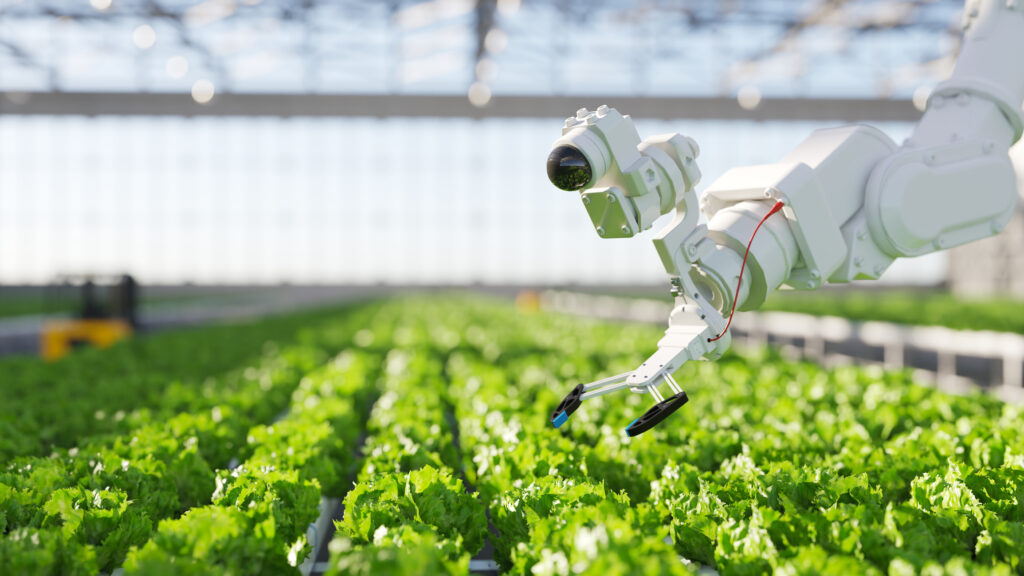
Farm Mechanization and Automation
Industrial automation using machinery, tools and robots in seeding, material handling, harvesting, etc.

Farm infrastructure
Technologies such as green house systems, Indoor/outdoor farming, drip irrigation, environmental control such as heating and ventilation.

Supply Chain Tech and Output Market linkage
Digital platform and physical infrastructure to handle post-harvest supply chain and connect farm output with the customers.

Quality Management and Traceability
Post-harvest produce handling, quality check and analysis, produce monitoring and traceability in storage and transportation.

Financial Services
Loans/credit facilities for input procurement, Insurance/ reinsurance of crop.

Information Platforms
Online platforms for agronomic, pricing, and market info.
Problems faced by Agriculture Businesses in India
These obstacles prevent the Agriculture industry in india to reach its full potential.
Input Supply Chain
Fragmented supply, fake/low-quality inputs, price inconsistency
The agricultural input supply chain in India faces severe fragmentation, with farmers often struggling to access genuine seeds, fertilizers, and pesticides. Counterfeit and substandard products flood rural markets, leading to crop failures and financial losses. Price inconsistency remains a major concern as intermediaries inflate costs unpredictably. Small and marginal farmers are particularly vulnerable, lacking the resources to verify product authenticity or negotiate better prices. The absence of standardized quality checks at distribution points allows fake products to proliferate. Digital traceability solutions and direct-to-farmer platforms are emerging but adoption remains limited. Building trust in the supply chain requires transparent sourcing, quality certification, and competitive pricing mechanisms that benefit both suppliers and farmers.
Technology Adoption
Low awareness, tech adoption resistance, high cost perception
Despite the transformative potential of agritech solutions, technology adoption among Indian farmers remains alarmingly low. Many farmers are unaware of precision farming tools, drone technology, and IoT-based monitoring systems that could significantly improve yields. Cultural resistance to change compounds the problem, with traditional farming methods deeply embedded in rural communities. The perception that modern technology is expensive and complicated creates barriers even when affordable solutions exist. Limited digital literacy, unreliable internet connectivity, and lack of vernacular language support further hinder adoption. Successful technology integration requires farmer education programs that demonstrate clear ROI, hands-on training, and localized support systems. Peer-to-peer influence through progressive farmers can accelerate adoption when combined with scalable, user-friendly solutions.
Farm Mechanization
High equipment cost, low utilization, access barriers
Farm mechanization in India lags significantly behind global standards, with high equipment costs making tractors and modern machinery inaccessible for smallholder farmers. The average landholding size of 1.08 hectares makes individual ownership economically unviable, leading to chronic underutilization of available equipment. Access barriers extend beyond cost to include inadequate rural infrastructure, poor service networks, and limited financing options. Equipment rental and sharing models show promise but face logistical challenges in remote areas. The lack of trained operators and maintenance facilities results in equipment breakdowns and reduced operational efficiency. Custom hiring centers and cooperative ownership models are emerging solutions, but scaling these initiatives requires significant investment in logistics, training, and affordable financing mechanisms tailored to agricultural cycles.
Storage & Processing
Post-harvest losses, lack of infrastructure, funding gaps
India loses approximately 15-20% of its agricultural produce annually due to inadequate storage and processing infrastructure. Post-harvest losses are particularly severe for perishables like fruits, vegetables, and dairy products, translating to billions in economic losses. Cold storage facilities remain concentrated in specific regions, leaving vast agricultural areas underserved. The lack of food processing units near production centers forces farmers to sell raw produce at lower prices. Funding gaps persist as traditional lenders consider storage infrastructure projects high-risk investments. Government schemes for warehouse construction face implementation challenges including land acquisition issues and bureaucratic delays. Modern solutions like solar-powered cold storage, mobile processing units, and community warehouses offer hope, but require sustained investment, technical expertise, and farmer participation to achieve meaningful scale.
Market Linkage
Middlemen dependency, poor price discovery, delays
The agricultural marketing system in India remains heavily dependent on middlemen who capture significant value while farmers receive minimal returns. Traditional mandis (wholesale markets) often lack transparency in price discovery, with farmers accepting whatever rates are offered without access to real-time market information. Payment delays are endemic, with farmers sometimes waiting weeks or months for dues. The multi-layered intermediary system inflates consumer prices while depressing farm-gate prices, creating inefficiencies that hurt both ends. Geographic isolation of farming communities limits their ability to explore alternative markets or negotiate better terms. Digital marketplaces and direct farmer-to-consumer platforms are disrupting this model, but achieving scale requires building trust, ensuring quality assurance, and creating reliable logistics networks that can handle the last-mile delivery challenge in rural India.
Trade & Export
Lack of transparency, export compliance issues
Indian agricultural exports face significant challenges related to transparency, compliance, and quality standards. Many farmers and aggregators lack awareness of international quality requirements, phytosanitary standards, and certification processes needed for export markets. The documentation and regulatory compliance burden is overwhelming for small-scale exporters who struggle to navigate complex procedures. Lack of traceability systems makes it difficult to meet the growing global demand for sustainably sourced, ethically produced agricultural products. Inconsistent quality across shipments damages India's reputation in premium export markets. Infrastructure gaps at ports and inadequate cold chain logistics result in quality degradation during transit. Building export competitiveness requires investments in certification infrastructure, training programs, and digital traceability systems that can verify origin, quality, and sustainability credentials throughout the supply chain.
Agri Finance
Limited credit access, high risk, low financial literacy
Access to formal credit remains a critical challenge for Indian farmers, with institutional lending covering only a fraction of agricultural financing needs. Banks and financial institutions perceive agriculture as high-risk due to weather dependency, price volatility, and fragmented landholdings. This results in stringent collateral requirements and high interest rates that exclude the most vulnerable farmers. The informal lending sector fills the gap with exploitative terms that perpetuate cycles of debt. Low financial literacy compounds the problem, with farmers often unaware of government schemes, crop insurance options, and formal lending products available to them. Digital innovations in agri-fintech are creating new models based on alternative credit scoring using satellite data, farm records, and transaction histories. However, scaling these solutions requires building financial awareness, simplifying application processes, and developing risk-sharing mechanisms that make agricultural lending viable for formal institutions.
Data & Advisory
Information gaps, delayed or inaccurate data
Indian farmers operate in an information vacuum, lacking access to timely and accurate data that could significantly improve their decision-making. Weather forecasts, market prices, pest outbreak warnings, and soil health information are either unavailable or reach farmers too late to be actionable. The extension system that traditionally provided agricultural advisory has weakened, with insufficient extension officers to serve the farming population. Generic advice fails to account for local conditions, crop varieties, and micro-climatic factors that influence farming outcomes. The digital divide means that even when information is available online, many farmers cannot access it. AI-powered advisory services and satellite-based crop monitoring systems are emerging solutions, but effective implementation requires localized content creation, vernacular language support, and integration with existing farmer networks. Building a robust agricultural data ecosystem demands investment in ground-level data collection, validation systems, and last-mile delivery mechanisms.
How Agritech Companies Are Transforming agriculture in india
Innovative solutions transforming Indian Agriculture through technology and digital platforms.
Digital Input Marketplaces
Trustworthy sourcing, competitive pricing, easy access
Agritech startups are revolutionizing the agricultural input supply chain through digital marketplaces that connect farmers directly with verified manufacturers and distributors. These platforms aggregate quality seeds, fertilizers, pesticides, and farm equipment from multiple suppliers, enabling price comparison and competitive pricing that was previously impossible for individual farmers. Quality assurance mechanisms including product verification, batch tracking, and genuine product guarantees help eliminate the menace of counterfeit inputs that has plagued rural markets for decades. Mobile-first platforms with vernacular language support ensure accessibility for farmers across literacy levels and geographies. Features like doorstep delivery, credit options, and expert recommendations based on soil type and crop requirements add significant value. Subscription models for recurring input needs and bulk purchasing options for farmer producer organizations (FPOs) are driving down costs further. Real-time inventory visibility and predictive ordering based on seasonal requirements help ensure timely availability during critical farming windows.
Farmer Education Platforms
Farmer education, ROI clarity, scalable adoption
Technology adoption in agriculture is being accelerated through comprehensive farmer education platforms that demonstrate clear return on investment. Agritech companies are deploying video-based learning modules in local languages, interactive tutorials, and live demonstration sessions that help farmers understand the benefits of precision farming tools. Progressive farmer networks serve as local champions, sharing their success stories and helping neighboring farmers overcome resistance to change. ROI calculators and crop simulation tools allow farmers to visualize potential yield improvements and cost savings before making technology investments. Field demonstrations, trial plots, and pilot programs provide hands-on experience with new technologies in familiar settings. Helplines with agronomists provide personalized guidance and troubleshooting support. Gamification elements, achievement badges, and community recognition programs incentivize continuous learning. Partnerships with agricultural universities and government extension services add credibility and scale to these education initiatives.
Equipment Sharing Networks
Equipment sharing, affordability, efficiency
The challenge of expensive farm machinery is being addressed through innovative equipment sharing and rental platforms that follow the 'Uber for tractors' model. These agritech solutions connect equipment owners with farmers who need machinery for specific operations, optimizing utilization rates and making mechanization accessible to smallholders. Advanced booking systems allow farmers to schedule equipment during critical farming windows, while GPS tracking ensures transparency and accountability. Service aggregators bring trained operators along with equipment, solving the skilled labor shortage in rural areas. Pay-per-use pricing models eliminate the burden of capital investment and maintenance costs for individual farmers. Equipment-as-a-service packages include maintenance, insurance, and operator training. Custom hiring centers equipped with multiple machinery types serve as one-stop solutions for farming operations. Cooperative ownership models facilitated by agritech platforms enable farmer groups to collectively invest in and share expensive equipment.
Smart Storage Solutions
Efficient storage, reduced wastage, long-term ROI
Post-harvest losses are being dramatically reduced through technology-enabled storage and processing solutions deployed by agritech companies across India. Solar-powered cold storage units, hermetic storage bags, and IoT-monitored warehouses are extending shelf life and preserving quality of perishable produce. Shared cold storage networks allow smallholders to access refrigeration infrastructure on a pay-per-use basis, democratizing access to preservation technologies. Real-time temperature and humidity monitoring with automated alerts prevents spoilage and ensures optimal storage conditions. Mobile processing units bring value addition closer to farms, enabling farmers to convert raw produce into processed products with longer shelf life and higher value. Warehouse receipt financing allows farmers to use stored commodities as collateral for credit, improving their financial flexibility. Integration with market linkage platforms ensures that stored produce can be sold at optimal prices when market conditions are favorable.
Direct Market Access Platforms
Direct market access, better pricing, transparency
Agritech platforms are dismantling the exploitative middleman system by providing farmers direct access to buyers across retail, wholesale, institutional, and export markets. Digital marketplaces display real-time prices from multiple mandis and buyers, enabling informed selling decisions that maximize farmer income. Transparent auction mechanisms and dynamic pricing algorithms ensure fair price discovery based on actual demand and supply conditions. Quality grading at farm gate using mobile apps and portable testing devices helps farmers understand and improve their produce quality. Aggregation services combine produce from multiple smallholders to achieve volumes required by large buyers while ensuring traceability. Direct-to-consumer channels including farm-to-fork delivery services create premium market access for quality produce. Integration with logistics partners ensures reliable and cost-effective transportation from farms to markets. Digital contracts and escrow payment systems protect both farmers and buyers, building trust in online agricultural commerce.
Traceability & Compliance Tech
Traceability, certification, consumer trust
Export and trade challenges are being addressed through blockchain-based traceability solutions and digital compliance platforms developed by agritech companies. End-to-end supply chain visibility from farm to fork enables verification of origin, production practices, and handling conditions that international buyers increasingly demand. Digital certification management systems streamline the process of obtaining and maintaining organic, GAP, and other quality certifications required for premium market access. Automated documentation and export compliance tools reduce the paperwork burden and minimize errors that cause shipment delays. QR code-based product authentication helps build consumer trust by enabling verification of product authenticity and origin. Integration with government systems including e-NAM and APEDA simplifies regulatory compliance for exports. Sustainability tracking and carbon footprint measurement tools position Indian agricultural products favorably in environmentally conscious global markets. These platforms are opening new export opportunities for Indian farmers in previously inaccessible premium markets.
Digital Lending & Insurance
Easy loans, insurance coverage, financial inclusion
Agri-fintech companies are transforming agricultural finance through innovative digital lending and insurance products designed specifically for the farming context. Alternative credit scoring models using satellite imagery, farm records, mobile usage patterns, and transaction histories are enabling loans to farmers without traditional collateral or credit history. Instant loan disbursal through mobile apps provides timely access to working capital for input purchases, equipment rental, and operational expenses. Parametric crop insurance products triggered automatically by weather data eliminate the claim filing hassles that have plagued traditional insurance. Embedded finance solutions integrated with input marketplaces and market linkage platforms provide seamless access to credit at point of need. Micro-savings products help farmers build financial resilience against crop failures and price shocks. Financial literacy programs delivered through mobile apps and community workshops improve farmers' understanding of financial products and planning. Partnerships with government subsidy programs enable stackable benefits that reduce the effective cost of credit and insurance for farmers.
Data-Driven Farm Intelligence
Real-time insights, localized advisory, decision support
Data-driven decision making is being democratized through AI-powered advisory platforms that deliver personalized, actionable insights to farmers' mobile phones. Satellite imagery analysis provides crop health monitoring, yield estimation, and early warning of stress conditions across large farming areas. Hyper-local weather forecasting with alerts for frost, heavy rainfall, and pest-favorable conditions enables protective action before damage occurs. AI disease detection through smartphone photos helps farmers identify problems early when intervention is most effective. Customized crop calendars based on local conditions, variety characteristics, and weather forecasts guide farmers on optimal timing for planting, irrigation, fertilization, and harvesting. Soil health monitoring using sensor data and testing services provides nutrient management recommendations that optimize input usage. Integration with government schemes and market information ensures farmers don't miss out on subsidies, programs, or selling opportunities. Voice-based interfaces and chatbots in local languages make these sophisticated tools accessible to farmers regardless of literacy levels or technical familiarity.
Our Value Proposition for Agritech Companies in India
Strategic digital marketing solutions designed to accelerate growth for agritech businesses.
Brand Awareness
Build strong brand recognition among farmers, distributors, and agricultural stakeholders through targeted campaigns.
Community Building
Create engaged farming communities around your brand with educational content and peer networks.
Lead Generation
Capture high-quality leads from farmers, retailers, and B2B partners through optimized funnels.
Digital Presence
Establish authoritative online presence across search, social media, and industry platforms.
Audience Engagement
Drive meaningful interactions and build loyalty with personalized, relevant content strategies.