
Why Your Ad Spend is Wasting Money (And How Campaign Optimization Fixes It)
MindFount Admin
Author
Why Your Ad Spend is Wasting Money (And How Campaign Optimization Fixes It)
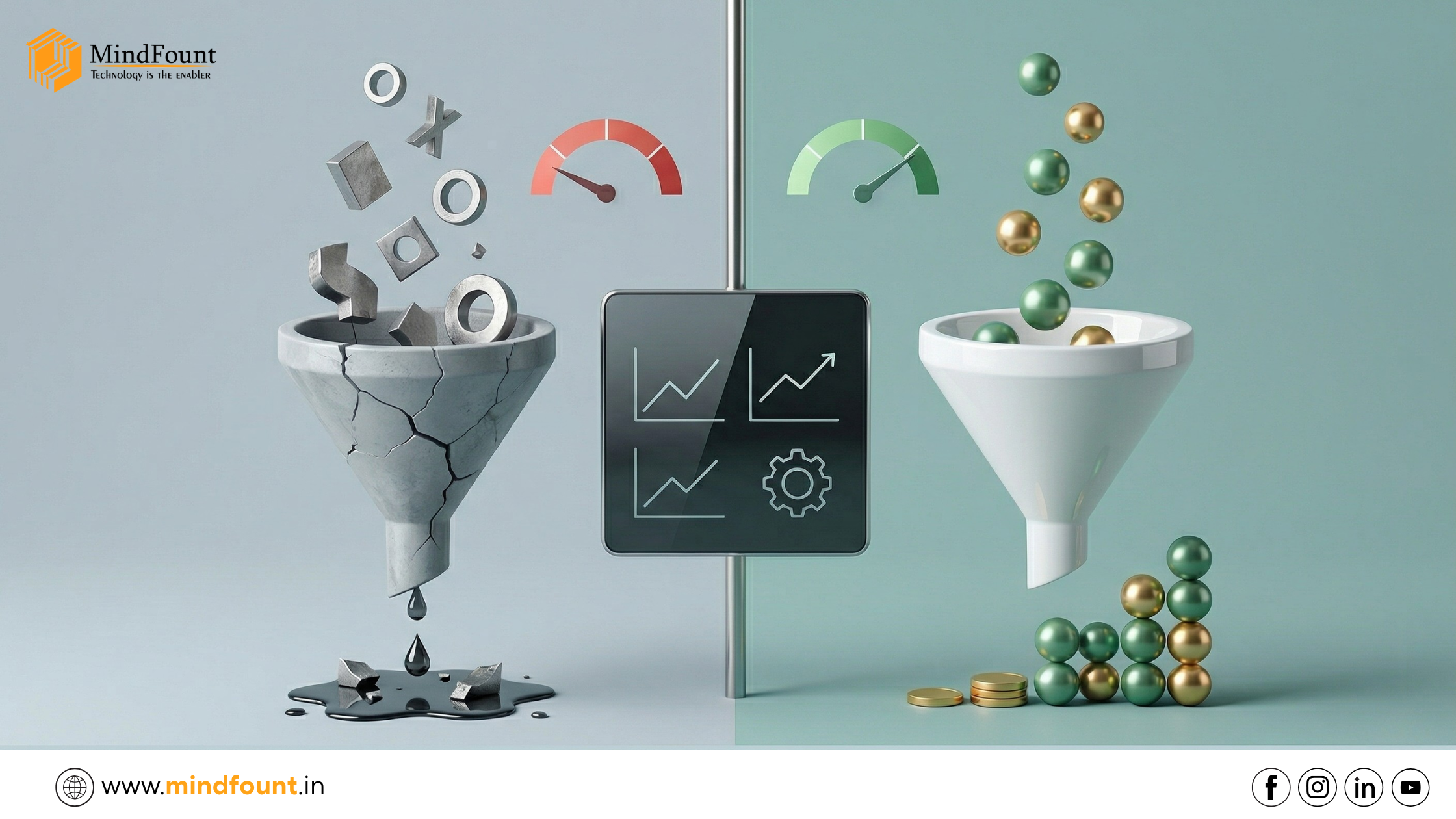
Most brands don’t realize when their ads stop working. Not because performance suddenly crashes, but because the decline is gradual. A campaign that once brought in profitable conversions starts delivering weaker results, costs quietly rise, and before you notice, your ad spend ROI is nowhere near what it used to be. The instinctive reaction is to increase the budget, assuming scale will fix the problem. In reality, it only magnifies inefficiency.
At the core of this issue is a lack of campaign optimization. Ads are not a plug-and-play system. They are a constantly evolving mechanism driven by data, behavior, and competition. Without actively refining how your campaigns are structured, targeted, and optimized, your spend doesn’t just plateau, it leaks.
The Illusion of Reach
One of the most common mistakes is equating reach with effectiveness. It feels productive to see your ads reaching thousands, even millions, of users. But reach without intent is just noise. When campaigns are set up with overly broad targeting, platforms distribute your ads to anyone who loosely fits the criteria. The result is predictable: impressions go up, but conversions lag behind.
Consider a brand selling premium fitness programs. Targeting “people interested in fitness” might generate traffic, but it mixes serious buyers with casual scrollers who simply enjoy watching workout videos. The algorithm doesn’t inherently know the difference unless you guide it. This is where ad budget optimization becomes critical. By narrowing your audience to those who show clear purchase intent—based on behavior, interests, and past interactions—you reduce wasted impressions and improve conversion quality. The goal is not to reach more people, but to reach the right ones.
When Clicks Lie
Metrics can be deceptive, especially when they look good on the surface. High click-through rates and low cost-per-click often create the illusion of success. But clicks do not equal revenue. Many campaigns are optimized for traffic rather than outcomes, which means the algorithm is trained to find users who are most likely to click, not those most likely to convert.
This is a subtle but expensive mistake. A campaign may bring in thousands of visitors, yet only a fraction take meaningful action. The disconnect lies in optimization. When you shift your focus from clicks to conversions, ensuring proper tracking, event mapping, and campaign objectives, you fundamentally change how platforms like Google Ads operate. Instead of rewarding curiosity, you start rewarding intent. This is the essence of performance marketing, where every decision is tied to measurable business outcomes rather than vanity metrics.
The Speed of Advertising Today
Digital advertising is no longer static. It operates in a dynamic environment shaped by real-time bidding, fluctuating competition, and constantly shifting audience behavior. What works today may not work tomorrow, and what performs in the morning might decline by evening.
Despite this, many brands still treat campaigns as set-and-forget systems. They launch ads, wait for days, and then evaluate performance. By that time, a significant portion of the budget may already be wasted on underperforming segments. Effective campaign optimization requires responsiveness. It involves monitoring data closely, identifying patterns early, and reallocating resources before inefficiencies compound. The advantage lies not just in strategy, but in speed, the ability to adapt faster than the market changes.
The Silent Decline of Creative Performance
Even the best-performing ads have a lifespan. Over time, audiences become familiar with the same visuals, messaging, and hooks. Engagement drops, costs increase, and conversions decline. This phenomenon, often overlooked, is known as creative fatigue.
The mistake is assuming that a winning ad will continue to perform indefinitely. In reality, digital audiences move quickly, and their attention resets just as fast. Without regular creative testing and iteration, campaigns lose their edge. Effective optimization means continuously experimenting with new angles, narratives, and formats. It’s not about changing everything at once, but about introducing variation consistently enough to maintain engagement and relevance.
Where the Funnel Breaks
Blaming ads is convenient, but often inaccurate. The real breakdown frequently occurs after the click. A user might be convinced enough to engage with your ad, but what they encounter next determines whether they convert or leave.
A slow-loading landing page, unclear messaging, or a complicated checkout process can undo all the effort spent on acquiring that click. This is where google ads overspending often becomes apparent, not because the platform is inefficient, but because the post-click experience fails to convert. Effective optimization extends beyond the ad itself. It requires aligning the promise of the ad with the experience of the landing page, ensuring continuity, clarity, and ease of action.
What Optimization Really Changes
When done correctly, campaign optimization doesn’t just improve performancel it transforms how your budget behaves. Instead of chasing results, your system starts generating them. Every element, from targeting to creatives to funnel design, works in alignment. Waste reduces, efficiency increases, and scaling becomes predictable rather than risky.
This is what separates brands that struggle with ads from those that consistently grow through them. It’s not about spending more. It’s about making every rupee accountable.
Final Thoughts
Ad platforms haven’t become less effective. They’ve become more competitive. The margin for error is smaller, and the cost of inefficiency is higher. Brands that fail to adapt end up blaming the channel, when the real issue lies in execution.
If your campaigns are consuming budget without delivering consistent returns, the problem isn’t visibility, it’s optimization.
Book a strategy call with Mindfount.
We’ll analyze your current campaigns, identify exactly where your spend is being wasted, and map out a clear path to improve your ad spend ROI through structured, data-driven campaign optimization.
Written by MindFount Admin
Contributing author at MindFount.