
The Psychology Behind High-Converting Ads (Used by Top Brands)
MindFount Admin
Author
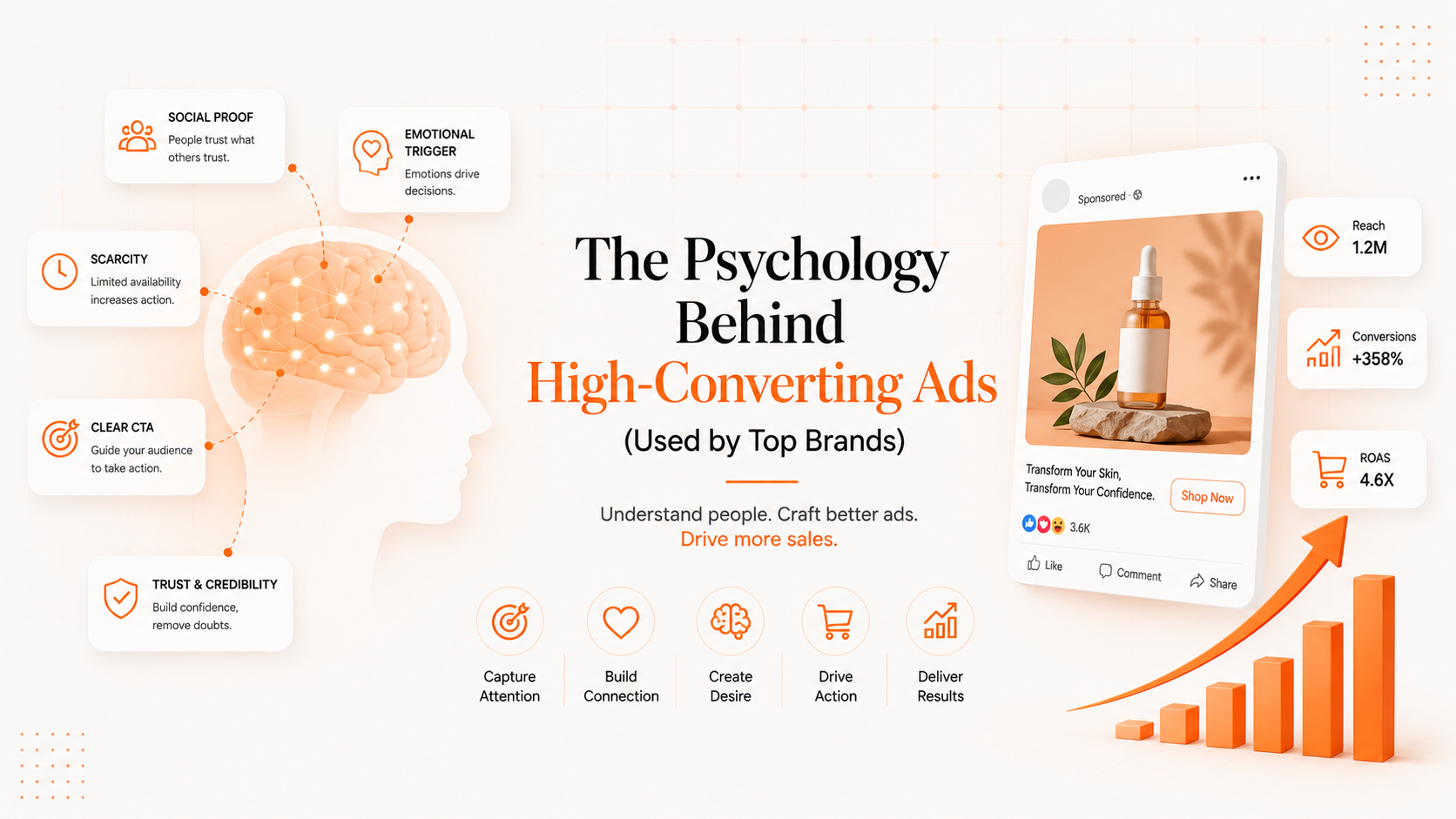
The Psychology Behind High-Converting Ads (Used by Top Brands)
Most ads don’t fail because of bad design or low budgets. They fail because they ignore how people actually think.
At its core, marketing is not about products, it’s about perception. The brands that consistently win understand ad psychology. They don’t just show features; they trigger emotions, reduce friction, and guide decisions. What looks like a “great creative” on the surface is usually a carefully structured response to human behavior.
If you understand how attention, trust, and decision-making work, building high converting creatives stops being guesswork.
Attention Is Earned in Seconds
The first battle is not conversion. It’s attention.
People don’t open Instagram or YouTube to see ads. They are there to consume content, which means your ad is competing with entertainment, not other brands. This is where most creatives fail, they look like ads.
High-performing brands approach this differently. They design the first few seconds to interrupt patterns. A bold statement, a relatable problem, or an unexpected visual forces the brain to pause. This reaction is automatic. Humans are wired to notice what feels different or relevant.
This is a fundamental principle of consumer behavior marketing. Before someone can be convinced, they must first stop scrolling. Without that interruption, nothing else matters.
People Don’t Buy Products. They Buy Outcomes
One of the biggest mistakes in advertising is focusing on features instead of outcomes.
A skincare brand talks about ingredients. A fitness brand talks about workouts. But the customer is thinking about clear skin and confidence, or weight loss and self-image.
High-converting ads bridge this gap. They translate features into outcomes. They show transformation, not specification.
This works because of how the brain processes decisions. People evaluate purchases based on how it will change their current state. When ads clearly communicate that transformation, they reduce the effort required to understand value.
This is where ad psychology becomes practical. You’re not just informing, you’re helping the customer visualize a better version of their reality.
Trust Is Built Through Familiarity and Proof
Skepticism is the default response to advertising. People assume exaggeration. That’s why trust is one of the biggest conversion drivers.
Top brands don’t try to sound perfect. They try to sound believable.
User-generated content, testimonials, and raw, unpolished videos outperform highly produced ads because they feel real. They mirror how people naturally communicate. This familiarity lowers resistance.
From a consumer behavior marketing perspective, this taps into social proof. When people see others like them using a product, it validates the decision. It reduces perceived risk.
This is also why high converting creatives often look simple. They are designed to feel like content, not campaigns.
Simplicity Converts Faster Than Complexity
When people are confused, they don’t convert.
Many ads try to say too much. Multiple messages, multiple offers, multiple calls to action. The result is cognitive overload.
High-performing ads do the opposite. They simplify.
One problem. One promise. One action.
This aligns with how the brain makes decisions. The easier it is to process information, the more likely someone is to act. Complexity creates hesitation. Simplicity creates clarity.
In ad psychology, this is often referred to as reducing cognitive load. The less effort required to understand your message, the higher the chance of conversion.
Urgency and Scarcity Drive Action
Even when people are interested, they delay decisions.
This is where urgency and scarcity come in. Limited-time offers, low stock indicators, or exclusive deals create a sense of immediacy. They push users to act now instead of later.
This works because of loss aversion, a key principle in consumer behavior marketing. People are more motivated to avoid losing an opportunity than to gain a benefit.
However, the key is authenticity. False urgency erodes trust. Real constraints, communicated clearly, drive action.
What Top Brands Do Differently
The difference is not creativity alone. It’s intention.
Top brands don’t create ads randomly. They build them on psychological triggers:
They design for attention, not aesthetics
They communicate outcomes, not features
They build trust before pushing sales
They simplify decisions instead of complicating them
They use urgency to convert, not to manipulate
This is why their campaigns feel effortless. Behind that simplicity is a deep understanding of human behavior.
Final Thought
High-converting ads are not accidental. They are engineered.
When you understand ad psychology, your creatives stop being subjective. You’re no longer asking, “Does this look good?” You’re asking, “Will this make someone act?”
That shift changes everything.
If your ads are getting views but not conversions, the problem isn’t reach, it’s psychology.
Book a strategy call with Mindfount.
We’ll break down your current creatives, identify what’s missing from a consumer behavior standpoint, and help you build high converting creatives that are designed to drive real results.
Written by MindFount Admin
Contributing author at MindFount.